
The Science of Hair Follicles and Permanent Hair Removal
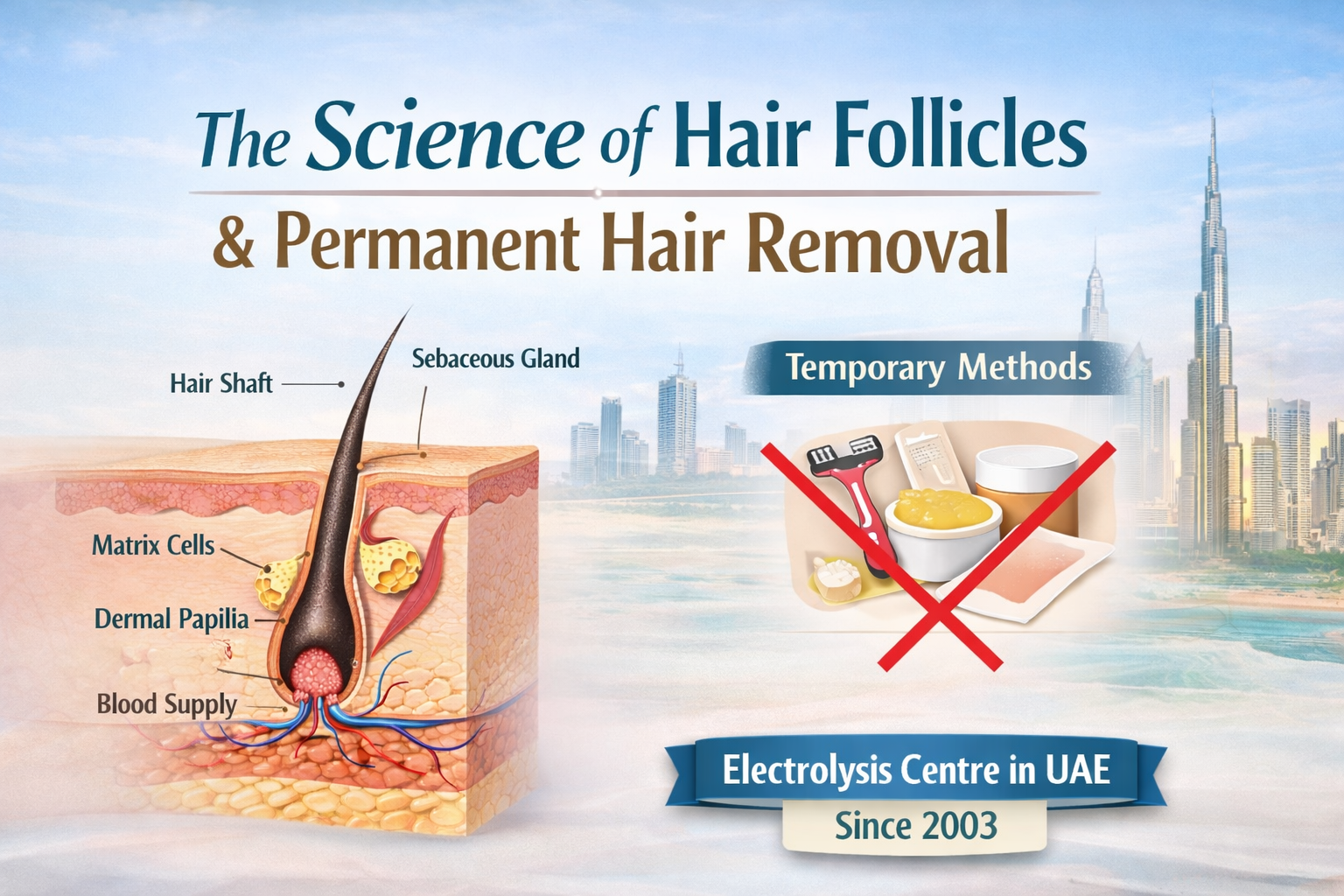 Hair follicles are little parts of the skin that determine how hair grows. These follicles have specific cells that control when, how, and how thick hair grows. Knowing how hair follicles work helps us understand how permanent hair removal works and why only some methods can stop hair growth at its root. This scientific knowledge is what makes permanent hair removal sessions possible. People often choose long-term treatments over repeated temporary hair removal procedures.
What is a hair follicle?
A hair follicle is a tunnel-like part of the epidermis that surrounds the hair’s root. It has:- The dermal papilla, which brings blood and nutrients • Matrix cells that make new hair cells • The sebaceous gland, which keeps the hair soft and smooth • The hair shaft, which is the section of the hair that you can see
How Hair Grows from the Follicle
Hair grows in a biological cycle: Anagen (active growth phase) – the follicle is entirely attached to the dermal papilla. Catagen (transition phase) — the follicle starts to shrivel and growth slows down. Telogen (resting phase) – the hair falls out and a new cycle starts. Permanent hair removal techniques must focus on the follicle during the anagen period, when it is biologically active and linked to the blood supply. To get accurate long-term hair removal outcomes, you need to know this scientific premise.Why Temporary Methods Can’t Stop Hair
Shaving, waxing, threading, and creams only take hair off the surface of the skin or above it. They don’t hurt:- The cutaneous papilla • The cells in the matrix • The blood flow to the follicle
How Permanent Hair Removal Affects the Follicle
Permanent hair removal works by stopping the follicle from making new hair. This means:- Hurting the dermal papilla • Turning off the matrix cells • Stopping the flow of nutrients
Why science cares about hair color and skin type
Melanin, the pigment that gives hair its color, is made by hair follicles. Some hair removal methods use color to work, which makes them less effective on light hair or specific skin tones. Methods that use electrolysis don’t depend on pigment. Instead, they go after the structure of the follicle itself, which lets them concentrate on:- Hair that is light or dark • Hair that is thin or thick • All skin colors
Why Multiple Sessions Are Scientifically Very important
Not all hair follicles are working at the same time. At any time:- A few follicles are in the anagen stage • Some are resting or changing
Skin Healing After Follicle Destruction
When a follicle stops working:- The body takes up the injured tissue • The skin heals the surface • The follicle stays dormant